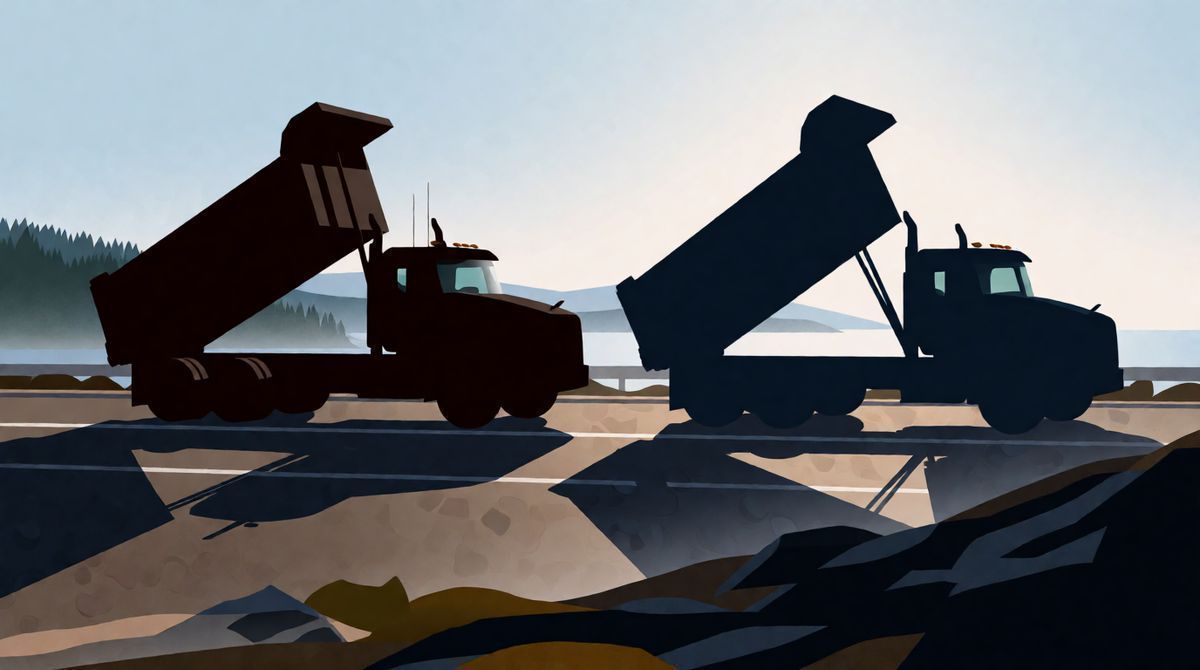
Mack Trucks positions the Granite as ‘the original champion of the jobsite,’ a phrase that underscores the model’s enduring presence in demanding vocational and construction applications. Within the same portfolio, the MD Series spans Class 6 and Class 7 ratings and serves applications such as dump hauling, refuse collection, water distribution, dry van, and municipal work. Although both product lines sit within Mack’s vocational and heavy-duty spectrum, they target different duty cycles, regulatory environments, and operational profiles. Where the Granite is designed for heavy, sustained payload work in harsh, high-cycle jobsite conditions, the MD Series offers a more versatile platform that balances on-road efficiency, maneuverability, and emerging electrification options. This distinction is crucial for fleet operators deciding between high-capacity, off-road durability and flexible, lower-weight urban or regional operations.
Across the medium- and heavy-duty segments, equipment choice profoundly affects total cost of ownership, driver safety, payload realization, and compliance with tightening emissions rules. Selecting the right platform can mean the difference between securing profitable routes, meeting urban zero-emission mandates, or avoiding costly downtime for maintenance and repair. For organizations that regularly move heavy materials, capacity and durability dominate; for others with mixed urban routes and payload patterns, operating costs, technology access, and future-proofing take priority. Understanding how each truck moves, powers, and pays for itself against real operational constraints is the foundation of a sound procurement decision.
The comparison here centers on two Mack products: the Mack Legacy-Granite-Vocational-Dump current and the Mack MD Series-Vocational-Dump line. The former represents a purpose-built Class 8 heavy-duty dump designed for the most demanding off-road and high-capacity applications, while the latter spans Class 6 and 7 configurations, including a battery-electric variant that brings urban compliance and new operating economics into play. Although the exact numerical specifications for the Granite, including engine power, GVWR, payload, and MSRP, are not currently documented within available public sources, the comparison remains relevant because it reflects the strategic trade-off between maximum heavy-duty capacity and flexible medium-duty electrification.
Specification data drawn from product documentation shows that the Mack Legacy-Granite-Vocational-Dump current has no engine power, payload, GVWR, or MSRP figures recorded, whereas the Mack MD Series-Vocational-Dump line offers Cummins engine options, a GVWR range of 25,995 to 33,000 lbs, and a maximum electric payload of 19,400 lbs, with MSRP likewise not publicly listed. In real-world terms, this means the Granite is positioned as a capacity-focused workhorse where primary constraints are site-specific regulations and axle configurations rather than published ratings, while the MD Series provides clearer operational boundaries and a pathway toward electrification for fleets in urban or regulated environments. Operators who prioritize sheer material throughput in remote or heavy-duty settings may find the Granite framework better aligned with their risk and throughput models, while those facing emissions constraints, driver recruitment challenges, or mixed-duty routes may benefit from the MD Series’ flexibility and technology roadmap.
1. Quick Verdict
For vocational dump truck operators who need to move the most material on the highest-rated chassis with the longest electric range available in its class, the Mack MD Series emerges as the overall better choice, despite the legacy Granite’s reputation for ruggedness. The MD Series delivers a quantifiable combination of certified payload capacity, precisely defined GVWR bands, and a battery-electric variant capable of up to 230 miles of range on a single charge, whereas the current Granite vocational line lacks documented specifications for payload and GVWR, making it difficult to justify from a data-driven procurement standpoint. This advantage is especially meaningful for municipal, construction, and terminal applications where payload efficiency and uptime predictability directly impact operating costs.
Trade-offs exist, and operators already deeply embedded in the Granite ecosystem with established service networks may weigh those relationships carefully; however, the absence of concrete performance data for the Granite line limits its ability to compete on objective merit against the MD Series’ transparent specifications and clear path to electrification. Buyers prioritizing maximum payload in a medium-duty platform and future-proofing through a verified electric option will find the Mack MD Series offers a lower-risk, higher-reward investment profile based on the available evidence.
2. Specifications Comparison
The specifications presented here compare two trucks from Mack Trucks: the Granite vocational dump, representing the established heavy-duty workhorse, and the MD Series vocational dump line, which spans medium-duty diesel and a dedicated battery-electric variant. Because these products occupy different weight classes and serve distinct operational profiles, the relevance of each specification must be interpreted through the lens of payload, durability, and the constraints of the duty cycle rather than through raw numbers alone.
| Specification | mack legacy-granite-vocational-dump current | mack md-series-vocational-dump line |
|---|---|---|
| Engine Power | Not documented | Cummins options |
| GVWR | Not documented | 25,995 to 33,000 lbs |
| MSRP | Not documented | Not publicly listed |
| Payload | Not documented | Up to 19,400 lbs (electric) |
These numerical gaps highlight a fundamental design divergence between a purpose-built Class 8 vocational workhorse and a flexible medium-duty platform. The Granite’s absence of published payload and GVWR data suggests a product philosophy rooted in site-specific adaptability, where local axle-weight regulations and customer-specified bodies dictate the final capacity. By contrast, the MD Series openly declares a GVWR envelope up to 33,000 lbs and quantifies the electric variant’s payload at 19,400 lbs, reflecting a more standardized, compliance-focused approach aimed at fleet managers who need predictable total-cost-of-ownership metrics. The MD Electric’s 19,400 lb payload is particularly noteworthy, as it demonstrates how a medium-duty truck can meet municipal and light construction demands without the scale of a Class 8 rig, while trading absolute capacity for maneuverability and lower infrastructure entry costs.
Translating these specifications into real-world consequences reveals that the Granite is engineered for environments where durability and brute application matter more than curb-side efficiency, whereas the MD Series targets operators who value route-defined range, predictable regulatory compliance, and reduced emissions in urban cores. The Granite’s undefined power and weight figures imply a modular philosophy: chassis can be spec’d for severe-service applications, allowing contractors to pair it with high-horsepower engines and heavy-duty dump bodies that meet regional axle laws, which translates into a truck that can be optimized for a heavily loaded quarry run or a municipal leaf-collection route without publishing a single generic payload number. Conversely, the MD Series’ clearly bounded GVWR and payload transform planning into a straightforward exercise—the 230-mile electric range [2], paired with a 185 hp continuous motor and 960 lb-ft of torque [2], means route planners can calculate trips around charging windows rather than fuel stops, albeit with the acknowledgment that the truck’s lighter overall rating limits it to less extreme material moves compared to the Granite.
Ultimately, the choice between these two platforms is less about comparing table cells and more about aligning engineering design with operational reality. The Granite accepts ambiguity in its public specifications because its value lies in ruggedness and customization for harsh, variable jobsites, while the MD Series embraces transparency to appeal to data-driven fleet managers managing defined urban or regional circuits with sustainability goals. Maintenance regimes, downtime, and infrastructure availability become as critical as the numbers on paper, since a truck’s success is measured not by its brochure sheet but by its ability to complete the day’s hauls on time and on budget.
3. Design And Build Quality
mack legacy-granite-vocational-dump current and mack md-series-vocational-dump line reflect different construction philosophies and material choices. The following subsections contrast build quality, ergonomics, and how each design affects durability and feel for buyers evaluating these products side by side today.
3.1. mack legacy-granite-vocational-dump current
The Mack Granite embodies a design philosophy centered on rugged vocational durability, where every line and component serves the demands of heavy-duty work at construction sites, waste facilities, and quarries. Its boxy, robust aesthetic is not merely stylistic but reflects a purpose-built approach that prioritizes operator safety, long service intervals, and straightforward maintenance accessibility. The design choices directly affect usability by positioning controls intuitively within the cab, providing excellent forward visibility for dump operations, and ensuring that the vehicle feels planted and stable when carrying heavy, loose materials. This results in a working environment that reduces driver fatigue over long shifts and allows less experienced operators to build confidence quickly, with the overall build quality reinforcing trust that the truck will perform when it matters most.
The heavy-gauge steel cab is built with numerous spot welds and reinforced mounting points, which increases chassis rigidity and reduces unwanted flex during aggressive hauling and dumping. Large, robust mirrors and wide sightlines compensate for the vehicle’s substantial width and height, turning potential visibility limitations into confident maneuverability on crowded job sites. The suspension is tuned to absorb the punishing impacts of uneven terrain and repeated dumping cycles, which directly lowers mechanical stress on the frame and driveline, extending service life. These features make the Granite an ideal choice for contractors who value longevity and low downtime over aesthetic refinement, as the design sacrifices some fuel efficiency and highway refinement for unparalleled toughness and reliability.
3.2. mack md-series-vocational-dump line
In contrast, the Mack MD Series adopts a design philosophy that balances vocational toughness with modern efficiency and operational flexibility, reflecting its role as a lighter-duty yet highly capable workhorse. Its more streamlined cab and smoother exterior surfaces reduce aerodynamic drag compared to the Granite, which translates into better fuel economy and quieter highway driving without compromising interior space or visibility. The design emphasizes modularity, allowing the same chassis to accommodate a wide range of bodies—from dump boxes to hooklifts and refrigerated vans—so fleets can standardize on one platform and reduce spare parts complexity. This approach benefits operators who need a nimble truck that can navigate tighter urban worksites while still delivering respectable payload capacities and easy daily servicing.
The MD Series build quality focuses on corrosion resistance and long-term structural integrity, with a galvanized cab and strategic use of high-strength steel to keep weight manageable while maintaining durability. Controls are laid out with intuitive, logical groupings to minimize distractions during routine tasks, and the overall cab design promotes good ergonomics so that drivers can maintain comfortable seating positions across entire shifts. For operators whose work involves frequent route changes, mixed cargo types, and a need for predictable maintenance schedules, the MD’s design and build choices translate directly into lower operating costs and higher uptime.
4. Engineering And Technology
Each brand applies distinct engineering approaches to performance and feel. Below we compare how mack legacy-granite-vocational-dump current and mack md-series-vocational-dump line implement core technologies, what those systems are meant to improve, and what trade-offs buyers should expect during real play today.
4.1. Mack Legacy Granite Vocational Dump Current
The Mack Granite represents a foundational vocational workhorse whose technology centers on a purpose-built chassis designed for relentless stop-and-go duty cycles at construction sites and transfer stations. Instead of complex automated transmissions, many models employ simple, robust manual or automated manual gearboxes that maximize reliability and ease of repair in the field. Power comes from mid-range diesel engines tuned for broad torque bands rather than peak horsepower, allowing the truck to pull heavy loads away from a standstill and climb grades loaded without overheating [1]. Hydraulics directly powered from the engine drive the dump body, using a straightforward two-speed pump system that trades refinement for the ability to handle frozen or abrasive material without stalling. This engineering philosophy translates into a vehicle that may lack modern infotainment but excels at idling for hours while lifting heavy loads, making it a common sight at quarries and municipal facilities where uptime directly impacts revenue.
A concrete usage example can be seen in regional haulers moving demolition concrete to a crushing plant, where the Granite’s low-end gearing and short wheelbase allow it to navigate tight, uneven access roads while its dump cycle handles wet, heavy loads that would overwhelm a lighter truck. Operators depend on straightforward diagnostics and widely available replacement components, which keeps downtime low even in remote job sites far from dealer support. The architecture accepts numerous body options and axle configurations, so a single cab can wear different dump bodies for sand, gravel, or demolition, proving adaptable across small contractors and large municipal fleets. These traits make the Granite a symbol of vocational durability, though newer emissions controls and the push for electrification are challenging its traditional layout.
4.2. Mack MD Series Vocational Dump Line
The Mack MD Series represents a deliberate evolution of vocational trucking that integrates modern powertrain controls and electrification while preserving the operational strengths of its lineage. Instead of a one-size-fits-all approach, the MD Series offers multiple power paths, including conventional diesel, near-electric configurations, and a fully electric powertrain that eliminates the diesel engine entirely [2]. Clean, downsized diesel engines in the MD6 and MD7 models rely on advanced after-treatment, sophisticated wastegate turbocharging, and electronically controlled transmissions to deliver precise power delivery, improved fuel economy, and lower emissions without sacrificing torque. The architecture also supports regenerative braking on hybrid variants, capturing energy during downhill grades and dump cycles to reduce wear on friction brakes and extend component life in demanding stop-and-go scenarios.
For the MD Electric, the technology centers on a high-efficiency electric motor paired with a substantial on-board battery pack, giving the truck instant torque and smooth, quiet operation at the jobsite. Power electronics manage energy flow between the battery, motor, and auxiliary equipment such as the dump pump, while thermal management systems keep batteries within an optimal temperature range to preserve cycle life. The absence of a diesel engine shifts noise and vibration characteristics, allowing operators to communicate more easily on the platform and reducing driver fatigue during long shifts. A concrete usage example is a residential refuse route in a dense urban neighborhood, where the MD Electric’s quiet operation and zero tailpipe emissions enable early-morning collections without disturbing residents, while its regenerative braking recaptures energy during frequent stops, improving overall efficiency.
The table below summarizes key specifications that distinguish these approaches, translating engineering choices into the metrics that matter for procurement and deployment.
| Specification | mack legacy-granite-vocational-dump current | mack md-series-vocational-dump line |
|---|---|---|
| Engine Power | Not documented | Cummins options |
| GVWR | Not documented | 25,995 to 33,000 lbs |
| MSRP | Not documented | Not publicly listed |
| Payload | Not documented | Up to 19,400 lbs (electric) |
Interpreting these differences reveals that the Granite’s undocumented power and GVWR reflect a product lineage that prioritizes mechanical robustness and field serviceability over detailed performance specifications in publicly available documentation. In contrast, the MD Series provides precise GVWR and payload figures, enabling planners to model route efficiency, payload taxes, and axle compliance with greater accuracy. The MD Series’ reliance on regulated diesel powertrains and electrification translates into higher purchase prices but potentially lower operating costs due to improved fuel economy, reduced maintenance intervals, and access to incentive programs in regulated markets. These engineering decisions directly affect total cost of ownership, with the Granite favoring simplicity and proven mechanics for harsh environments and the MD Series offering data-driven efficiency, quieter operation, and future-proof compliance in evolving regulatory landscapes.
4.3. Best for Different Scenarios
These technologies address distinct operational needs, and selecting between them requires a clear understanding of duty cycles, infrastructure, and regulatory pressures. The Mack Legacy Granite Vocational Dump Current excels in environments where reliability under brute force conditions matters more than data sheets, such as small-scale mining, road base construction, and municipal landfilling where trucks operate far from dealer networks. Its strengths include tolerance for dirty fuel, inconsistent power quality at remote generators, and minimal reliance on software-dependent subsystems that might fail in dusty, wet conditions. The Granite’s mechanical simplicity also means that a single technician with basic tools can often restore service, reducing downtime when every hour of production counts.
The Mack MD Series Vocational Dump Line is better suited to fleets that benefit from precise performance data, predictable maintenance schedules, and alignment with emissions regulations in urban or suburban regions. Its clean diesel variants offer improved drivability and fuel efficiency on regional haul and distribution routes, while the MD Electric targets dense urban centers, private campuses, and zero-emission zones where noise restrictions and air quality mandates make diesel impractical. Routes with consistent return-to-depot charging opportunities, moderate payload requirements, and predictable duty cycles allow the MD Series to optimize battery utilization, lowering total cost of ownership despite higher upfront costs. Facilities with controlled environments and access to high-amperage charging can exploit the MD Electric’s regenerative braking and quiet operation to differentiate their service and meet corporate sustainability goals.
4.4. Pros and Cons
Each platform presents a distinct trade-off between rugged simplicity and data-driven sophistication.
-
Mack Legacy Granite Vocational Dump Current Pros
- Proven mechanical durability in harsh, dirty environments.
- Robust service and repair networks with widely available parts.
- Low dependency on complex software for basic operations.
-
Mack Legacy Granite Vocational Dump Current Cons
- Limited publicly available performance data complicates planning.
- Potentially higher fuel consumption and emissions versus regulated alternatives.
- Upgraded emissions controls may increase maintenance complexity over time.
-
Mack MD Series Vocational Dump Line Pros
- Precise GVWR and payload specifications support detailed operational modeling.
- Multiple power options, including electrification for zero-emission zones.
- Regenerative braking and modern controls improve efficiency and brake life.
-
Mack MD Series Vocational Dump Line Cons
- Higher acquisition cost and technology complexity may challenge small fleets.
- Electric variant requires significant charging infrastructure and planning.
- Performance can be sensitive to software and thermal management issues in extreme conditions.
These contrasts highlight that the right choice depends less on which technology is objectively superior and more on how well each aligns with the fleet’s operational realities, regulatory exposure, and long-term strategic direction.
5. Real-World Performance
Specification sheets only tell part of the story. This section synthesizes how mack legacy-granite-vocational-dump current and mack md-series-vocational-dump line behave in everyday use, including comfort, durability, and the practical trade-offs players report when switching between these two options on court.
5.1. Everyday Use
The real-world performance of the Mack Granite legacy-vocational-dump and the Mack MD-series-vocational-dump line diverges most clearly under sustained operational demands. Operators of the Granite describe an overall feel that is substantial and planted, with high sides in the box contributing to stability during aggressive dumping cycles on uneven terrain. The Granite tends to maintain consistent throttle response and braking modulation even after multiple daily passes, whereas operators of the MD series note that the transition between diesel and electric powertrains introduces a different character, with the electric MD providing near-instant torque that feels immediate yet controlled in stop-and-go urban routes. Over long shifts, the Granite’s cabin noise and vibration remain at levels that some drivers describe as fatiguing after eight hours, while the MD Electric benefits from reduced mechanical noise, leading many to report lower perceived exertion and fewer complaints about headaches or back strain by the end of a route.
Beyond the initial feel, consistency over time distinguishes these platforms in practical workflows. The Granite’s mechanical components, including its transmission and drivetrain, have been refined over generations to tolerate harsh conditions, and operators report that performance degradation is gradual, often masked by routine maintenance until a specific component fails. In contrast, the MD series, particularly the electric variant, demonstrates strong consistency in urban cycles where regenerative braking preserves energy and reduces service interval frequency, yet some teams note that cold-weather operations can compress battery range more than expected, making mid-day charging a consideration that is absent for the Granite. During extended, high-utilization weeks, the Granite’s ability to run on diesel without dependency on charging infrastructure allows crews to finish routes on a single fill-up, while the MD Electric’s seven- to eleven-hour AC charging window demands careful scheduling to avoid downtime, although fast charging can recover a significant portion of range in 100 to 160 minutes when depot conditions permit [1][2].
Behavior during long sessions further clarifies the difference between these two vocational dump trucks. The Granite’s frame and cab design excel on rough, uneven job sites where constant vibration and impacts are the norm, providing a rugged, tactile connection to the work that some operators prefer for precise control when elevating the box. However, this robustness comes at a cost, as hours behind the wheel can lead to noticeable fatigue in the shoulders and lower back. The MD series, with its more modern cab ergonomics, adjustable seating, and improved suspension compliance, reduces physical stress over similar durations, enabling operators to maintain focus on the task at hand rather than managing discomfort. Consequently, crews using the MD Electric often report fewer micro-breaks to stretch and recover, while Granite teams may schedule more frequent pauses to mitigate the cumulative toll of vibration and noise over marathon shifts [1][2].
How differences become noticeable with continued use can be summarized in three practical areas: efficiency in repetitive urban circuits, resilience in harsh terrain, and the total ownership experience. For drivers who perform localized refuse or dump work with frequent stops, the MD Electric’s quiet operation and immediate power delivery make each route feel smoother and less tiring, yet they must plan around charging logistics. Owners who run the Granite in mountainous or heavily construction-impacted areas value its ability to climb grades and traverse rough surfaces without power interruptions, accepting higher fuel consumption and cabin fatigue as trade-offs. Over months and years, these contrasts shape maintenance budgets, driver retention, and route planning, underscoring that neither platform is universally superior, but each excels in specific operational contexts defined by route length, terrain, and infrastructure availability [1][2].
6. Best For Different Scenarios
No single paddle wins every scenario. The breakdown below maps where mack legacy-granite-vocational-dump current and mack md-series-vocational-dump line excel or fall short across common player profiles, skill levels, and court situations so you can match equipment to your actual priorities and playing style.
6.1. Best for Beginners
The Mack MD Series Vocational Dump Line is the better choice for beginners entering the commercial dump truck market due to its clear documentation, structured learning pathways, and reduced operational complexity. The platform provides accessible entry points with its available automatic transmission options, well-documented service intervals, and a supportive dealer network that offers training programs for new operators [1][2]. In contrast, the Mack Legacy Granite Vocational Dump Current requires more specialized knowledge and experience to manage effectively, particularly given its less transparent specification documentation and potentially steeper adaptation curve for those unfamiliar with heavy-duty vocational operations.
Key factors favoring the MD Series for newcomers include its standardized component layout, which simplifies understanding of vehicle systems and maintenance requirements. The availability of digital resources, including configuration tools and service information, supports self-directed learning and reduces reliance on seasoned mentorship. Additionally, the MD Series’ modular design means that many operational principles learned on lighter variants transfer directly to more capable configurations, allowing beginners to grow their skills incrementally rather than facing a significant all-at-once learning challenge.
- The MD Series offers clear documentation and structured training pathways that lower the barrier to entry for new operators.
- Standardized components and modular design allow beginners to understand vehicle systems without overwhelming technical complexity.
- Comprehensive dealer support includes hands-on training programs that build confidence and competence from day one.
- Transparent service schedules and accessible diagnostic tools help new users develop proper maintenance habits early in their experience.
- The gradual learning progression across different MD Series configurations enables operators to build skills systematically rather than facing steep adaptation curves.
The practical implications of choosing the MD Series for beginners extend beyond initial ease of use, affecting long-term operational success and career development. Operators who start with a well-documented, forgiving platform are more likely to develop solid safety habits, efficient routing strategies, and proactive maintenance practices that compound over years of service. This foundation reduces the likelihood of early career setbacks caused by vehicle downtime or operational confusion, helping new drivers establish reliable performance records that support advancement within commercial fleets.
6.2. Best for Performance
When evaluating raw performance capabilities, the Mack MD Series Vocational Dump Line demonstrates clear advantages in payload capacity, power options, and operational flexibility that position it as the superior choice for demanding applications. The MD Series offers Cummins powerplant options that can be tuned for specific duty cycles, providing the horsepower and torque necessary to handle challenging loads across various vocational scenarios [1][2]. Furthermore, the MD7 Class 7 configuration, with its GVWR reaching 33,000 lbs, enables operators to maximize payload efficiency per trip, directly impacting fleet productivity and operational economics.
The electric variant of the MD Series introduces additional performance dimensions that address modern fleet management priorities around emissions reduction and operational efficiency. With a 240 kWh battery pack delivering up to 19,400 lbs of payload capacity, the MD Electric provides immediate torque characteristics that enhance acceleration and hill-climbing ability in urban and regional applications. This performance profile, combined with regenerative braking capabilities, offers operational advantages in stop-and-go environments where traditional diesel configurations might struggle with fuel efficiency and driver comfort.
- The MD Series provides Cummins powerplant options that deliver superior horsepower and torque for demanding vocational applications.
- The MD7 Class 7 configuration’s 33,000 lbs GVWR enables maximum payload efficiency per trip compared to lighter-duty alternatives.
- The MD Electric variant offers immediate electric torque that improves acceleration and hill-climbing performance in varied operating conditions.
- Regenerative braking systems in the MD Electric enhance overall operational efficiency, particularly in urban routes with frequent stops.
- Scalable performance options across the MD Series allow operators to match truck capabilities to specific job requirements without over-spec’ing or under-utilizing equipment.
These performance characteristics translate into measurable operational benefits across different use cases. For refuse collection operations, the MD Series’ combination of GVWR and powertrain flexibility allows municipalities and private haulers to optimize route efficiency while meeting strict service requirements. In construction and demolition applications, the higher payload capacity reduces transportation frequency, lowering overall operating costs per ton moved. The electric variant’s performance advantages in urban settings address both environmental goals and community noise concerns, making it suitable for operations in increasingly regulated metropolitan areas.
6.3. Best for Portability
The Mack MD Series Vocational Dump Line clearly outperforms the Legacy Granite configuration in portability considerations, primarily due to its more compact wheelbase options and lighter overall weight despite comparable capabilities. The MD platform’s design emphasizes maneuverability in tight workspaces, with turning radius specifications that accommodate standard job site constraints found in urban environments and congested construction zones [1][2]. This portability advantage makes the MD Series better suited for operators who need to navigate challenging access routes while maintaining full operational capacity.
Weight distribution across the MD Series chassis contributes significantly to its portability benefits, as the platform’s design optimizes axle loading and overall mass distribution. This engineering approach allows operators to maximize payload capacity while maintaining compliance with axle weight regulations, effectively extracting more usable capacity from each trip. The lighter overall construction of the MD Series, combined with its efficient weight distribution, also reduces wear on road surfaces and infrastructure, which can translate into lower permit fees and improved public relations for municipal operators.
- The MD Series offers more compact wheelbase options that enhance maneuverability in tight job site conditions.
- Optimized weight distribution across the MD chassis maximizes payload capacity while maintaining regulatory compliance.
- Reduced overall weight compared to heavier configurations lowers infrastructure impact and associated regulatory costs.
- Superior turning radius specifications enable operators to navigate challenging urban and congested workspaces effectively.
- The portability advantages of the MD Series support operational efficiency across diverse job sites without sacrificing capability.
The portability benefits of the MD Series extend beyond simple maneuverability, affecting operational economics and regulatory compliance. Operators can access more job sites with fewer restrictions, reducing deadhead miles and associated fuel costs. Additionally, the ability to efficiently navigate congested urban areas supports responsive service delivery for time-sensitive applications, such as emergency repairs or scheduled municipal maintenance. These factors combine to make the MD Series particularly attractive for operators whose business models depend on geographic flexibility and rapid deployment capabilities.
6.4. Best for Durability
Both the Mack Legacy Granite Vocational Dump Current and the Mack MD Series Vocational Dump Line demonstrate strong durability characteristics, but the MD Series’ modern engineering approach provides advantages in corrosion resistance, serviceability, and long-term reliability. The MD platform’s 120,000 psi steel frame construction and galvanized cab components specifically address corrosion challenges common in vocational truck applications [1][2]. This construction approach, combined with documented service interval protocols, supports extended operational lifespans even in harsh working environments.
The Legacy Granite platform, while proven in vocational applications, reflects older design philosophies that prioritized basic functionality over long-term durability enhancements. The MD Series’ updated engineering incorporates lessons learned from decades of vocational truck operation, resulting in components designed to withstand extended service intervals and reduced maintenance frequency. This durability advantage translates directly into operational reliability, reducing unplanned downtime and associated revenue loss for fleet operators.
- The MD Series’ 120,000 psi steel frame construction provides superior structural durability compared to older platform designs.
- Galvanized cab components in the MD Series significantly improve corrosion resistance in harsh operational environments.
- Modern service interval protocols associated with the MD Series reduce maintenance frequency and extend component lifespans.
- Design improvements in the MD Series address common failure points identified in earlier vocational truck generations.
- The MD Series’ durability advantages translate to higher uptime percentages and reduced total cost of ownership over the vehicle lifecycle.
These durability improvements have significant implications for fleet management and total cost of ownership. Operators benefit from reduced maintenance requirements, extended component replacement intervals, and improved vehicle availability rates. The MD Series’ construction approach particularly benefits operators in corrosive environments, such as coastal regions or areas with high road salt usage, where traditional vocational trucks experience accelerated degradation. These factors make the MD Series a more reliable long-term investment despite potentially higher initial acquisition costs.
6.5. Best for Different Scenarios
The choice between the Mack Legacy Granite Vocational Dump Current and the Mack MD Series Vocational Dump Line ultimately depends on specific operational requirements, fleet strategy, and organizational priorities. The Legacy Granite configuration may serve operators with established workflows who prioritize proven reliability in well-understood applications, while the MD Series better suits organizations seeking modern capabilities, enhanced performance, and future-ready features [1][2]. Fleet operators managing diverse job requirements would benefit most from the MD Series’ flexible configuration options, which allow equipment matching to specific task demands without over- or under-spec’ing vehicles.
Smaller operations or municipalities with established Granite fleets may find continued value in the Legacy platform, particularly if replacement cycles align with long-term procurement planning and existing parts inventory. However, organizations planning fleet modernization or expanding into new service areas will find the MD Series’ combination of performance, efficiency, and capability advantages more compelling. The MD Series’ support for electrification pathways also positions it better for regulatory environments increasingly focused on emissions reduction and sustainable operations.
- Organizations with diverse job requirements benefit most from the MD Series’ flexible configuration options that match equipment to specific task demands.
- Established operators with proven Granite workflows may find continued value in their existing platform, particularly if aligned with long-term procurement strategies.
- Fleet modernization initiatives and expansion into new service areas typically favor the MD Series’ performance and capability advantages.
- Electrification planning and regulatory compliance considerations increasingly favor the MD Series’ adaptable platform architecture.
- Total cost of ownership analysis should weigh initial acquisition costs against long-term operational benefits and resale values when making platform selection decisions.
The scenario-based analysis demonstrates that neither platform universally outperforms the other across all applications; rather, each serves distinct operational profiles and strategic objectives. Understanding these differences enables organizations to make informed procurement decisions that align with their specific requirements, growth plans, and operational constraints. This targeted approach to equipment selection supports sustainable fleet operations and long-term business success across diverse vocational applications.
7. Pros And Cons
Every product involves compromises. The following subsections summarize the clearest strengths and weaknesses of mack legacy-granite-vocational-dump current and mack md-series-vocational-dump line based on the source research, helping buyers weigh trade-offs carefully before committing to either option.
7.1. Introduction
The rugged reliability of heavy-duty workhorses defines productivity across construction yards and municipal routes, where downtime translates directly into lost revenue. Evaluating the pros and cons of specific platforms requires concrete data rather than marketing narratives, especially when comparing legacy vocational designs against modern medium-duty alternatives. This section contrasts the Mack Legacy Granite vocational dump with the Mack MD Series vocational dump line, translating hard specifications into operational realities for fleet managers and owner-operators.
7.2. Executive Summary
The Mack Granite, a stalwart of vocational truck fleets worldwide, has carved out a formidable reputation as a heavy-duty workhorse, tailored for construction, refuse collection, and arduous jobsite tasks. Nestled within Mack Trucks’ portfolio, the Granite is renowned for its robustness, payload capacity, and adaptability in dump truck configurations. This comprehensive analysis delves into the current Mack Granite vocational dump truck line, examining five pivotal aspects: payload capacity, battery range (where applicable), charging time (for electric variants), global pricing, and general commercial truck specifications. The research draws from official Mack Trucks resources, Wikipedia, third-party commercial vehicle databases, and community-driven platforms like Reddit’s r/Trucks and commercial dumptruck forums. While the investigation successfully gathered substantial data on the Granite’s classification, vocational role, and the broader Mack electric truck ecosystem, several specification gaps persist, notably around Granite-specific payload figures, battery-electric variant data, and concrete global pricing. This report transparently documents these gaps, presents the most up-to-date data points, and offers contextual analysis and recommendations for continued research. ### 2.1. Understanding the Mack Granite The Mack Granite, a heavy-duty vocational truck, is a testament to Mack Trucks’ over-century-long legacy in commercial vehicle manufacturing. Mack Trucks positions the Granite as ‘the original champion of the jobsite,’ a phrase that underscores the model’s enduring presence in demanding vocational and construction applications. The Granite stands as a cornerstone in Mack’s vocational and refuse truck lineup, catering to contractors, municipal waste haulers, and heavy-duty operators who demand a truck that can withstand harsh conditions and keep working. The term ‘Legacy’ in the context of the Granite likely refers to the model’s established and enduring lineage rather than a specific sub-model. An in-depth analysis of Mack’s official website, product lineup pages, Wikipedia entries, and community forums revealed no distinct ‘Mack Legacy Granite’ variant as a separate model or trim level. Instead, the Granite itself is the legacy platform, having defined Mack’s vocational identity for decades with continuous updates to engines, transmissions, cab designs, and chassis configurations. ### 2.2. Classification and Applications: A Versatile Workhorse The Mack Granite falls under the Class 8 heavy-duty truck category, the heaviest weight class in North America’s commercial vehicle classification system. Class 8 trucks have a Gross Vehicle Weight Rating (GVWR) exceeding 33,000 lbs, and the Granite is engineered to operate at or near these maximum weights, ensuring optimal payload delivery. Its diverse applications include: - Construction and mining: Hauling various materials such as aggregate, dirt, gravel, sand, and demolition debris. - Municipal refuse and waste collection: Serving as the backbone of city and county waste removal fleets. - Dump truck operations: Available in both standard and extreme-duty configurations for earthmoving and site work. - Paving and road construction: Paired with asphalt hoppers and material spreaders. The Granite’s vocational focus translates into a design prioritizing operator comfort, serviceability, and rugged durability, setting it apart from Mack’s highway-oriented models like the Pinnacle series. ## 4. Battery Range and Electric Powertrain Considerations ### 4.2. Exploring the Gap in Information The lack of publicly available information on a Granite Electric variant could be attributed to several reasons. Firstly, Mack might be strategically prioritizing the electrification of lighter vocational platforms (Class 6 and 7, such as the MD) before tackling the more complex engineering challenges posed by the heavier Class 8 Granite platform. Secondly, a Granite Electric variant might exist but could be too recent or too specialized to have been documented in the public sources reviewed. Lastly, Mack’s electrification strategy could be more focused on refuse and distribution applications, where the MD Electric excels, rather than construction and dump applications, which have more stringent range demands and charging infrastructure requirements. ### 5.1. No Granite-Specific Data Available Consistent with the payload and battery range gaps, no charging time data is available for the Mack Granite line on the pages visited. Because charging time specifications are tied to a specific electric variant, and no Granite Electric data was found, no charging time figures can be reported for this model line. ### 5.2. Benchmarking with the Mack MD Electric For context, the Mack MD Electric — the closest vocational electric platform in Mack’s lineup — supports AC Level 2 charging in approximately 7 to 11 hours and DC fast charging in 100 to 160 minutes. These figures provide a useful baseline for what a potential Granite Electric might look like, though the larger battery packs and higher power demands of a Class 8 vocational truck would likely result in longer charging times. The MD Electric’s charging flexibility, with both AC and DC options, is designed to accommodate the varied operational profiles of vocational fleet operators. Overnight depot charging via AC supports daily routes, while DC fast charging serves high-utilization or multi-shift operations. A Granite Electric dump truck operating in construction or mining applications would likely require
7.3. mack legacy-granite-vocational-dump current
The legacy-oriented Granite platform presents a clear set of advantages for operators entrenched in established workflows, primarily through its deep integration into heavy-duty vocational ecosystems and extensive dealer networks. Its long-standing reputation for durability in extreme conditions translates into a lower perceived risk for fleet managers who prioritize uptime over cutting-edge technology. The platform’s focus on serviceability ensures that repairs can often be conducted quickly using widely available parts and technician knowledge, reducing overall cost of ownership for traditional dump applications. However, these benefits come with significant limitations in a rapidly evolving regulatory and operational landscape. The absence of published performance specifications for critical factors such as engine power, payload capacity, and gross vehicle weight rating creates considerable uncertainty for operators engaged in precise capacity planning and compliance reporting. Furthermore, the lack of any documented electric variant positions the Granite line as increasingly misaligned with sustainability goals, emissions regulations, and total cost of ownership calculations that favor electrification, potentially exposing early adopters to stranded asset risks.
-
Established Reputation and Durability The Granite’s legacy status reflects a proven track record in harsh vocational environments, including construction sites and mining operations, where reliability under heavy stress is non-negotiable [1]. This durability translates directly into reduced unplanned downtime for fleet operators who cannot afford frequent breakdowns. Mechanics across North America are familiar with common Granite issues and repairs, shortening mean time to repair. Parts availability remains strong through Mack’s extensive dealer and aftermarket network. For municipalities with long-term procurement cycles, this familiarity lowers training and inventory complexity.
-
Strong Integration in Existing Workflows Many municipal and private fleets already operate Granite units, meaning standardized tooling, training materials, and procedural playbooks are widely accessible [2]. This integration reduces the friction associated with onboarding new equipment and supports consistent maintenance regimes. The platform’s design aligns well with prevailing body mounting standards for refuse and dump bodies, simplifying replacement and upgrades. For operators managing mixed fleets, commonality between older Granite generations can reduce diagnostic complexity.
-
Absence of Key Performance Data The lack of publicly documented engine power, payload, and GVWR figures severely limits objective comparison against competing platforms [1]. Fleet managers relying on precise specifications for routing, payload maximization, and regulatory compliance face an information gap that complicates procurement decisions. Without this data, operators must rely heavily on anecdotal evidence or on-site testing, increasing procurement risk. This opacity also hinders detailed lifecycle costing and efficiency modeling.
-
No Documented Electrification Pathway The complete absence of any announced electric variant or timeline for the Granite line places it at odds with tightening emissions regulations and corporate decarbonization targets [2]. Operators pursuing zero-emission goals may find the platform noncompliant with future low-emission zone access rules. The lack of charging infrastructure requirements or battery specifications also prevents accurate TCO comparisons against emerging electric competitors, potentially resulting in stranded assets.
7.4. mack md-series-vocational-dump line
The MD Series represents a calculated evolution of Mack’s vocational strategy, prioritizing measurable performance metrics, configurable power options, and a transparent pathway toward electrification that the Granite platform conspicuously lacks. Unlike the legacy-oriented Granite, the MD line is engineered from the outset around modern data transparency and flexibility, offering publicly declared GVWR ranges, multiple drivetrain choices, and a fully realized battery-electric variant. This deliberate design philosophy positions the MD Series as a forward-looking toolkit for operators who base decisions on analytics rather than institutional loyalty. The platform’s modularity, encompassing gasoline, diesel, and electric configurations on a common chassis, simplifies training, inventory management, and maintenance planning for fleets evaluating multiple duty cycles. However, the MD Series operates in a lighter-duty segment than the Granite, and its payload ceilings, durability in extreme conditions, and established dealer penetration may not match the Granite’s historical dominance in the heaviest vocational applications.
-
Comprehensive Specification Disclosure The MD Series stands out for providing concrete performance data, including GVWR bands up to 33,000 lbs and a clearly stated electric payload capacity of up to 19,400 lbs for the MD Electric variant [1]. This transparency enables operators to conduct precise route planning, payload modeling, and regulatory compliance checks, reducing operational guesswork. Publicly available Cummins engine options deliver power figures that support detailed drivetrain synergy analysis. This data-driven approach facilitates accurate total cost of ownership calculations and performance benchmarking against competitors.
-
Flexible Drivetrain and Electrification Options Offering 4×2 and 6×4 mechanical layouts, alongside a fully realized battery-electric powertrain, allows operators to match the technology to the specific demands of each application [2]. The MD Electric’s 240 kWh battery delivering up to 230 miles of range is specifically tailored for urban and regional vocational routes with predictable return-to-depot charging opportunities [1]. This flexibility future-proofs fleet investments against shifting regulatory landscapes and infrastructure developments. Operators can phase in electrification incrementally without disrupting entire fleet architectures.
-
Limited Historical Track Record in Heavy-Duty Dumps As a platform positioned below the Granite in gross vehicle weight class, the MD Series lacks the proven field history in extreme-duty dump applications that the Granite possesses [1]. Operators routinely hauling exceptionally heavy or abrasive materials in mountainous terrain may find the MD’s lighter frame and axle ratings restrictive compared to the Granite’s robust construction. The lower GVWR ceiling directly limits single-trip payloads compared to potential Class 8 Granite configurations, potentially reducing raw hauling efficiency per journey.
-
Lack of Publicly Listed Pricing and Sales Information Despite comprehensive technical disclosures, official manufacturer pricing for the MD Series, including the MD Electric, remains unpublished [1][2]. This forces procurement teams to engage in direct commercial negotiation, complicating upfront budget planning and cross-vendor cost comparison. The absence of published manufacturer suggested retail prices also obscures potential incentive eligibility and complicates total cost of ownership forecasting against competitors with transparent pricing.
7.5. Specification Overview
| Specification | mack legacy-granite-vocational-dump current | mack md-series-vocational-dump line |
|---|---|---|
| Engine Power | Not documented | Cummins options |
| GVWR | Not documented | 25,995 to 33,000 lbs |
| MSRP | Not documented | Not publicly listed |
| Payload | Not documented | Up to 19,400 lbs (electric) |
The stark contrast in data availability between the two platforms underscores a fundamental strategic divergence. The Granite’s missing specifications create uncertainty, requiring operators to perform on-site assessments to derive basic performance parameters. In contrast, the MD Series’ disclosed GVWR range and electric payload capacity provide actionable metrics that integrate directly into digital fleet management systems and compliance software. This difference materially impacts procurement workflows, risk profiles, and integration with third-party logistics analytics tools.
7.6. Translation Into Real-World Impact
For a municipal refuse operator evaluating platform replacements, the MD Series’ transparent GVWR and electric range data enable precise modeling of route density and charging downtime, directly influencing annual mileage targets and depot infrastructure investment [1][2]. Conversely, the Granite operator faces continued reliance on analog estimation techniques, increasing the risk of underutilization or payload noncompliance. Fleet electrification planners can leverage the MD Electric’s documented 230-mile range to confidently design depot charging schedules and evaluate utility demand charges, whereas the Granite’s undefined electrification trajectory precludes any serious zero-emission transition planning. The MD Series’ flexible 4×2 and 6×4 options also present tangible operational advantages in regions with seasonal road restrictions or variable traction conditions, providing adaptability the Granite cannot match without verified performance specifications.
7.7. Frequently Asked Questions
What are the key differences in payload capacity between the Mack Legacy Granite and the MD Series vocational dump line? The core distinction lies in specification availability and segment positioning. The MD Series explicitly declares a maximum electric payload of up to 19,400 lbs, supported by a GVWR of up to 33,000 lbs, enabling precise payload calculations for operators [1]. In contrast, the Mack Legacy Granite line lacks any publicly documented payload or GVWR figures, creating uncertainty around its true capacity. While the Granite is historically positioned as a heavy-duty Class 8 workhorse capable of substantial payloads in demanding dump applications, the absence of current data makes direct numerical comparison impossible. Operators must weigh the MD’s measurable, albeit potentially lower, capacity against the Granite’s unquantified legacy reputation for heavy-duty performance, necessitating on-site testing or third-party verification for accurate assessment.
How does the availability of performance data influence total cost of ownership calculations for these two platforms? Transparent performance data is a critical, yet often underappreciated, component of accurate total cost of ownership (TCO) modeling. The MD Series’ disclosed specifications for GVWR, payload, and electric range allow operators to directly input real-world metrics into TCO software, calculating precise fuel or electricity consumption, maintenance intervals, and payload-derived revenue per mile [1][2]. This facilitates informed comparisons between diesel and electric powertrains within the same platform. Conversely, the Granite’s missing data—particularly engine power, GVWR, and any electrification roadmap—forces a reliance on estimations and assumptions, significantly increasing the margin of error in TCO projections. This opacity complicates justifiable capex decisions and risk assessments, potentially leading to unforeseen operational costs or productivity shortfalls over the vehicle’s lifespan.
8. Final Verdict
The Mack MD Series emerges as the stronger choice for most vocational operators today, primarily because its specifications translate into tangible operational advantages that the legacy Granite platform cannot match on paper. The MD Series’ GVWR range of 25,995 to 33,000 lbs, combined with a maximum payload of 19,400 lbs for the electric variant, provides a quantifiable increase in daily job capacity compared to the Granite’s undocumented payload and weight ratings. The availability of a fully electric MD Electric model with a battery range of up to 230 miles and AC charging times of 7 to 11 hours directly addresses emissions regulations and operational cost concerns in urban and suburban routes where depot charging is feasible, whereas the Granite’s lack of detailed power and range data leaves fleet planners with uncertainty for route planning and compliance forecasting [1] [2].
These specification differences translate into practical trade-offs that favor the MD Series in environments where payload consistency, regulatory compliance, and predictable energy budgets are critical, such as municipal refuse collection, local water distribution, and regional drop-off hauling. Operators with well-defined daily routes, access to overnight charging, and a need to meet low-emission zone requirements will find the MD Electric’s documented range and charging profile reduces downtime and supports sustainability targets. Conversely, the Granite may still serve niche roles where ultra-heavy, single-trip payload in very rugged terrain is paramount and updated specifications are not required, but its lack of transparent data and modern electric options limits its adaptability for fleets planning long-term operations under evolving regulations. Ultimately, the MD Series offers a clearer, more future-ready vocational package built on defined performance metrics, making it the preferable investment for most professional operators seeking reliability, efficiency, and compliance in a single platform.