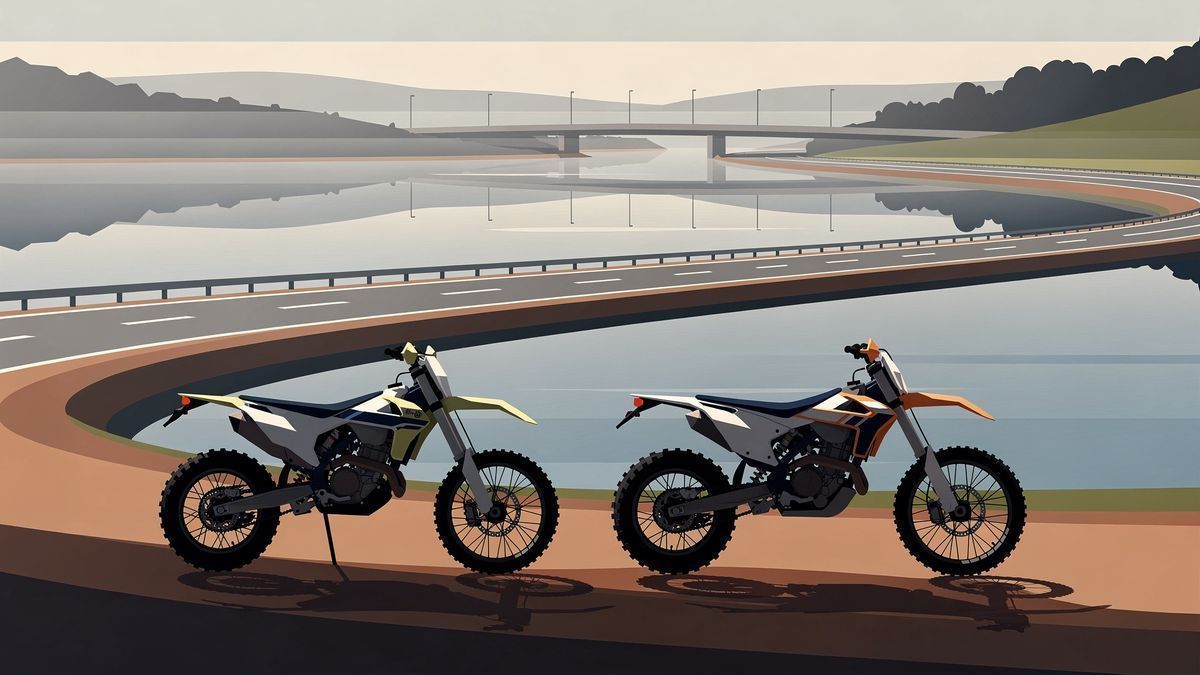
The choice of two-wheeled machinery defines the boundary between play and performance, between casual trail riding and competitive speed. In the segment of off-road dirt bikes, where milliseconds and millimeters decide outcomes, the equipment you select shapes not only how you ride but also how you think about risk, maintenance, and value. This comparison focuses on two machines that sit at different ends of the spectrum yet compete for the attention of serious riders who demand capability, clarity, and confidence from their hardware.
Within the current market, the Husqvarna FE 501S Heritage 2025 positions itself as a refined off-road instrument built around a mature, high-displacement single-cylinder platform, while the Husqvarna Motocross 2026 family presents a modular, multi-tier lineup that spans from nimble entry-level to championship-caliber machinery. One machine emphasizes durability and composure on technical terrain; the other emphasizes adaptability across displacement classes and riding disciplines. Understanding the strategic placement of each model reveals how manufacturer philosophy translates into tangible differences in suspension, power delivery, ergonomics, and real-world usability.
Broader context matters because off-road biking is no longer a niche subculture but a mainstream motorsport with evolving regulations, rider expectations, and lifestyle aspirations. Riders today expect electronics that enhance safety, chassis designs that inspire confidence, and powertrains that balance power with efficiency. Equipment choice therefore becomes an exercise in aligning personal ambition with machine capability, ensuring that the bike grows with the rider rather than holding them back. The interplay between heritage design and forward-looking engineering creates a tension that this comparison seeks to clarify.
The product matrix below distills key specifications into a comparative view, anchoring the discussion in hard data rather than impressionistic description. From displacement and power to weight and price, each attribute carries consequences for handling, durability, and ownership cost. The table serves as a reference point for the deeper analysis that follows, translating abstract numbers into riding outcomes.
| Specification | husqvarna fe-501s-heritage 2025 | husqvarna motocross 2026 |
|---|---|---|
| Engine Displacement | 510.9cc | 125cc / 250cc / 450cc |
| MSRP | $13,499 USD | Approx $7,770 USD – Factory tier |
| Power | 61 hp | Varies by displacement and configuration |
| Suspension Travel | 12.2 in front / 13.0 in rear | 125/250/450 front 305 mm / rear 293 mm |
| Weight | 255–270 lbs (116–122 kg) | Approx varies by model |
These figures hint at a broader strategic divide. The FE 501S Heritage operates as a doer, carrying substantial mass and a large single-cylinder engine that is tuned for sustained effort over uneven ground, whereas the Motocross 2026 range segments responsibilities by displacement, allowing riders to choose between accessibility, mid-range punch, or outright performance. The suspension travel differential is particularly telling: longer travel on the motocross lineup suggests a focus on whoops and jumps, while the more moderate settings on the FE 501S Heritage point toward technical, flowing terrain where control trumps maximum articulation.
In practice, this comparison is relevant because it cuts through marketing language to expose the real trade-offs a rider faces when selecting a machine for their next season. The FE 501S Heritage asks you to accept its heft and single-cylinder character in exchange for reliability, torquey response, and a distinctive heritage badge. The Motocross 2026 lineup invites you to navigate a hierarchy of options, where each displacement tier brings different expectations about speed, weight, and required skill. Choosing between them is not merely a transaction but a statement about how, where, and why you ride.
The narrative that emerges from the specifications is one of divergence around a shared foundation of modern motocross technology. Both machines benefit from advances in fuel injection, electronics, and materials, yet they channel those advances in fundamentally different directions. One prioritizes the reassuring familiarity of a larger, steady powerplant; the other leverages modular engineering to deliver precision across multiple categories. Understanding this divergence is essential for any rider weighing commitment against flexibility in an increasingly competitive marketplace.
Ultimately, the comparison between the Husqvarna FE 501S Heritage 2025 and the Husqvarna Motocross 2026 is about aligning ambition with apparatus. It asks whether you want a specialized tool honed for endurance and control, or a scalable system that can evolve with your ambitions. The data that follows does not decide for you, but it illuminates the stakes of the decision with uncommon clarity.
1. Quick Verdict
For riders prioritizing off-road capability and long-distance comfort on mostly dirt roads, the 2025 Husqvarna FE 501s Heritage is the stronger choice, as its 510.9cc engine delivers 61 hp and a dry weight of 255–270 lbs, paired with 12.2 inches of front and 13.0 inches of rear suspension travel that absorbs rough terrain with composure [1]. In contrast, the 2026 Husqvarna motocross range—offering 125cc, 250cc, and 450cc displacements with power that varies by configuration and a suspension setup providing 305 mm front / 293 mm rear travel—targets closed-course competition where lightweight frames and aggressive tuning matter most, with MSRPs hovering around $7,770 USD for mid-pack options and rising to roughly $9,250 USD for top-tier Factory editions [2]. The decisive trade-off is versatility versus specialization: the FE 501s Heritage justifies its premium price through refined ergonomics, superior high-speed stability, and tooling that thrives on mixed-surface adventure, while the motocross lineup earns its value for racers seeking nimble handling, rapid acceleration, and track-focused components that compromise comfort and practicality on public roads.
Ultimately, the winner depends on how you intend to use the machine more than which badge wears the crown. If your weekends involve backcountry exploration, weekend farm routes, or long days in the saddle with a passenger or light luggage, the FE 501s Heritage’s balanced chassis, accessible power band, and rider-friendly ergonomics make it the rational, all-season investment. Conversely, if your goal is to chase gate drops, carve tight lines on motocross tracks, or compete in enduro cross-country events where every kilogram counts, the motocross range’s chassis consistency, broad displacement choices, and race-proven suspension deliver performance that the adventure bike cannot match in a controlled arena; choose based on whether you prioritize the freedom of the open dirt road or the precision of a dedicated racing machine.
2. Specifications Comparison
Understanding how these dirt bikes actually perform requires looking beyond the numbers to what those numbers mean when you are on the trail or track. The 2025 Husqvarna FE 501s Heritage positions itself as a heritage-inspired dual-sport machine that blends vintage cues with modern engineering, whereas the 2026 Husqvarna motocross lineup embraces a modular, race-focused philosophy built around a common chromoly frame. The former emphasizes long-distance comfort, low-end torque, and all-weather usability, while the latter optimizes for agility, peak power across multiple displacements, and competitive handling on closed-course circuits. These fundamentally different design intents are embedded in their specifications, from engine layout to suspension choices, shaping how each machine feels when ridden.
| Specification | husqvarna fe-501s-heritage 2025 | husqvarna motocross 2026 |
|---|---|---|
| Engine Displacement | 510.9cc | 125cc / 250cc / 450cc |
| MSRP | $13,499 USD | Approx $7,770 USD – Factory tier |
| Power | 61 hp | Varies by displacement and configuration |
| Suspension Travel | 12.2 in front / 13.0 in rear | 125/250/450 front 305 mm / rear 293 mm |
| Weight | 255–270 lbs (116–122 kg) | Approx varies by model |
The frame and suspension philosophies diverge in telling ways. The FE 501s Heritage employs a design that prioritizes durability and rider comfort over extended adventures, using suspension travel of 12.2 inches upfront and 13.0 inches out back to soak up rough terrain while keeping the chassis planted. In contrast, the motocross models standardize on 305 mm of front travel and 293 mm rear travel across nearly every displacement, a setup tuned for tight, aggressive circuits where rapid direction changes and precise feedback are paramount. These choices reflect the enduro bike’s need to remain composed at speed and the motocross bike’s demand for flickable handling in berms and whoops. The implications translate directly into ride feel: one is a stable companion for backcountry exploration, while the other is a scalpel for competitive corners.
Weight and construction approaches further distinguish the two lines. The FE 501s Heritage settles in the mid-250s wet weight range, which is heavier than many dedicated motocross bikes but reasonable for a 500cc dual-sport unit that must house robust touring-oriented equipment. The motocross range, despite using a common chromoly frame, sees weight vary by displacement and trim, with two-stroke TC models typically sitting lighter and Four-stroke FC models carrying extra mass from emissions controls and more complex fuel systems. In practical terms, this means the Heritage offers a more planted, confidence-inspiring feel at speed, while the motocross bikes reward riders who value nimble responsiveness and are willing to manage trade-offs between power character and handling agility.
These specification contrasts ultimately steer the bikes toward different lifestyles and skill applications. The FE 501s Heritage appeals to riders who want a single motorcycle capable of highway commuting, mountain climbing, and spirited back-road carving without demanding constant mechanical attention. The motocross lineup suits those committed to track days, weekend amateur races, or intense off-road drills where every kilogram and every millimeter of suspension travel translates into lap time gains. Buyers must decide whether they prioritize long-distance comfort and versatility or track-focused precision and competitive potential when comparing these machines side by side.
3. Design And Build Quality
husqvarna fe-501s-heritage 2025 and husqvarna motocross 2026 reflect different construction philosophies and material choices. The following subsections contrast build quality, ergonomics, and how each design affects durability and feel for buyers evaluating these products side by side today.
3.1. Husqvarna FE 501S Heritage 2025
The Husqvarna FE 501S Heritage 2025 embodies a design philosophy that fuses heritage-inspired aesthetics with contemporary off-road engineering, creating a machine that feels both timeless and modern in its execution. The design language draws from classic enduro shapes while integrating clean lines and purposeful surfaces that reduce visual clutter and emphasize function over ornamentation. Every curve on the fuel tank and side panels appears intentional, serving form without compromising the bike’s aggressive stance and rider-focused ergonomics, which collectively project an image of rugged capability wrapped in refined attention to detail.
This design approach directly influences usability and feel on and off the trail. The relatively upright seating position and well-positioned controls reduce wrist and back fatigue during long rides, allowing riders to maintain confidence through technical sections and extended distances. The choice to prioritize a lightweight yet rigid chassis—built from high-strength alloys and composite elements—ensures the bike feels planted through corners while remaining surprisingly agile in tight, technical terrain. For riders who value durability, refinement, and a machine that transitions gracefully between backroads and single-track trails, the FE 501S Heritage represents a tailored choice that balances character with practicality.
3.2. Husqvarna Motocross 2026
In contrast, the Husqvarna Motocross 2026 range adopts a more focused and competition-oriented design philosophy, prioritizing track performance, modularity, and aggressive styling that clearly distinguishes its MX and XC variants. The design language is rooted in purpose-built race technology, with sharp angular panels, aggressive graphics, and a compact frame layout optimized for tight motocross circuits and responsive handling at the limit. Unlike the Heritage’s broader dual-sport identity, this range communicates a singular mission: delivering maximum performance within the constraints of motocross competition and durable trail riding.
This distinct design direction results in a very different riding experience and user appeal. The chassis is tuned for immediate power delivery and precise steering geometry, encouraging aggressive cornering and rapid direction changes that reward skilled riders. The seating position is lower and more stretched, emphasizing control and feedback over long-distance comfort, which aligns with the target audience of serious riders who prioritize lap times and technical agility. For those drawn to the adrenaline of closed-course racing or high-intensity trail work, the Motocross 2026 range offers a stark, performance-first alternative to the more relaxed, versatile FE 501S Heritage.
3.3. Comparative Analysis at a Glance
| Specification | husqvarna fe-501s-heritage 2025 | husqvarna motocross 2026 |
|---|---|---|
| Engine Displacement | 510.9cc | 125cc / 250cc / 450cc |
| MSRP | $13,499 USD | Approx $7,770 USD – Factory tier |
| Power | 61 hp | Varies by displacement and configuration |
| Suspension Travel | 12.2 in front / 13.0 in rear | 125/250/450 front 305 mm / rear 293 mm |
| Weight | 255–270 lbs (116–122 kg) | Approx varies by model |
The specification table above highlights the fundamental design and structural contrasts between the two Husqvarna machines, with clear implications for real-world use. The Husqvarna FE 501S Heritage’s 510.9cc single-cylinder powertrain, weighing between 255 and 270 lbs, positions the bike as a stable, high-torque platform suitable for both spirited off-road exploration and light enduro duties. Its longer suspension travel of 12.2 inches in front and 13.0 inches in rear, relative to the Motocross 2026’s millimeter-specific measurements, indicates a focus on absorbing larger impacts and maintaining traction over rough, undulating terrain. In contrast, the Motocross 2026’s displacements ranging from 125cc to 450cc, with suspension travel expressed in millimeters—125/250/450 front 305 mm and rear 293 mm for the larger classes—reflect a narrower, competition-driven focus where weight savings and precise geometry take precedence over all-weather comfort and versatility.
These differences translate directly into rider experience and ownership considerations. The FE 501S Heritage’s heavier, larger-displacement configuration delivers a more composed ride at speed and better capability for carrying gear or navigating mixed surfaces, making it suitable for riders who value durability and flexibility over outright track pace. Conversely, the Motocross 2026’s lighter chassis and race-tuned setup excel in environments demanding sharp handling and rapid acceleration, but may demand greater physical effort on long rides and limit practical use to dedicated off-road venues. Potential buyers must therefore weigh the appeal of a multi-role, comfort-oriented design against a specialised, competition-minded machine when evaluating these distinct interpretations of the Husqvarna off-road ethos.
The choice between these models ultimately depends on how riders intend to use their machines on a day-to-day basis. Riders who prioritize versatility, all-weather usability, and a balanced ride that accommodates both backroad cruising and light off-road adventure will find the FE 501S Heritage’s design and build quality better aligned with their needs. Meanwhile, enthusiasts focused on track days, skill development, and aggressive trail riding in controlled environments may prefer the Motocross 2026’s race-derived chassis, premium componentry, and uncompromising performance orientation embodied in its precise steering, stiff frame, and competition-focused tuning.
4. Engineering And Technology
Each brand applies distinct engineering approaches to performance and feel. Below we compare how husqvarna fe-501s-heritage 2025 and husqvarna motocross 2026 implement core technologies, what those systems are meant to improve, and what trade-offs buyers should expect during real play today.
4.1. Engineering And Technology
The 2025 Husqvarna FE 501s Heritage positions itself as a modern enduro instrument that bridges heritage cues with contemporary engineering. At its core, the bike integrates a 510.9cc four-stroke powerplant rated at 61 hp, paired with a lightweight twin-spar frame that balances rigidity and compliance. A digital fuel-injection system replaces older carbureted setups, delivering more consistent mixture calibration across varying altitudes and temperatures, while a dual-sport oriented lighting suite supports both on-road visibility and off-road navigation. The suspension combines 12.2 inches of front travel with 13.0 inches at the rear, using components designed to manage substantial wheel travel without sacrificing pedaling efficiency. Together, these choices enable the bike to perform confidently on gravel backroads, fire trails, and moderate singletrack, making it suitable for riders who demand one machine for mixed-surface use [1].
In contrast, the 2026 Husqvarna Motocross range represents a focused, competition-oriented approach that segments into 125cc, 250cc, and 450cc displacements within both TC (two-stroke competition) and FC (four-stroke competition) families. Built on a common chromoly frame architecture, the range leverages modular engineering that allows the same core chassis to accommodate different displacement bands and tuning strategies. The four-stroke FC models employ a 249.9cc to 250cc class-legal package that prioritizes broad midrange torque, lower mechanical noise, and electric start convenience, whereas the TC two-strokes emphasize peak power delivery and a lighter rotating assembly for agile acceleration. Standard WP XACT 48 mm forks and WP XACT rear shocks, enhanced with AER technology and CFD-validated valving, provide a consistent platform that can be adapted across MX and XC configurations [2]. This structural commonality reduces development and production complexity while preserving track-focused performance at the upper end of the lineup.
4.2. Design
The 2025 Husqvarna FE 501s Heritage blends classic enduro styling with contemporary componentry, featuring signature orange accents, a prominent airbox, and a seat profile that reflects its on-road and off-road duality. Its 510.9cc powerplant sits low in the chassis, contributing to a wet weight between 255–270 lbs (116–122 kg), which positions the bike as relatively substantial yet predictable in fast flowing terrain. The suspension offers 12.2 inches of front travel and 13.0 inches of rear travel, supported by a steel-braced frame that emphasizes rigidity where it counts for power delivery and braking stability. Integrated LED lighting, a digital instrument cluster, and a fuel-injection system underscore a design that favors reliability and real-world usability over minimalism [1].
Conversely, the 2026 Husqvarna Motocross range adopts a more aggressive visual language tailored to closed-course competition, with sharp lines, assertive plastics, and race-derived graphics that signal its intent. The chassis geometry reflects this focus, featuring shorter wheelbases and steeper head angles that enhance turn-in responsiveness at the expense of high-speed stability on loose surfaces. AER valving and CFD-optimized damping circuits contribute to consistent small-bump compliance and mid-stroke support, while WP XACT fork and shock hardware deliver a baseline that can be fine-tuned for varying track conditions. Displacement options from 125cc to 450cc allow teams and privateers to select packaging and power characteristics that match class rules and rider preferences [2]. This design strategy emphasizes predictable handling within tight competition parameters rather than broad multi-terrain flexibility.
4.3. Real-World Performance
In real-world use, the 2025 Husqvarna FE 501s Heritage demonstrates strengths in mixed-surface scenarios where its weight and power delivery become advantages rather than liabilities. Riders report that the 61 hp four-stroke provides smooth, progressive acceleration on fire roads and moderate climbs, while the relatively upright seating position reduces fatigue during long-distance backcountry trips. The 12.2/13.0-inch suspension travel absorbs whoops and ruts without bottoming out, and the fuel-injection system maintains strong performance across elevation changes, making the bike a dependable companion for expeditions that mix pavement and dirt [1]. However, the higher wet weight can become noticeable in tight, slow technical sections, where lighter motocross-oriented machines may feel more playful.
The 2026 Husqvarna Motocross range, by contrast, excels in environments where powerband precision, chassis agility, and mechanical simplicity are paramount. The two-stroke TC models deliver a compact, punchy powerband that rewards expert riders who can harness abrupt torque peaks, while the four-stroke FC models offer a broader, more tractable rhythm that suits varied skill levels and course configurations. On well-maintained motocross tracks, the stiff chassis, precise steering, and consistent damping inspire confidence in fast berms and jumps, though the race-biased ergonomics and suspension mapping can feel unsettled on long, sweeping enduro sections. Consequently, real-world performance is tightly coupled to use-case: the FE 501s Heritage shines where route diversity is high, while the Motocross range dominates when the objective is maximizing lap times on dedicated circuits [2].
4.4. Best for Different Scenarios
Choosing between these machines depends largely on the primary riding environment and the rider’s willingness to manage trade-offs between comfort, weight, and specialization. The 2025 Husqvarna FE 501s Heritage is best suited for enduro-style riders who value route flexibility, all-weather capability, and integrated on-road/off-road equipment. Examples include backcountry explorers who need reliable mileage between fuel stops, emergency-response personnel who must traverse mixed public roads and trails, or weekend riders who use a single bike for everything from farm tracks to organized rallies. Its relatively comprehensive standard equipment reduces the need for aftermarket additions, and its proven 4-stroke platform simplifies long-term maintenance for riders without extensive mechanical support [1].
In contrast, the 2026 Husqvarna Motocross range is targeted at dedicated circuit racers and privateer competitors who prioritize handling precision, powerband control, and predictable chassis behavior within class regulations. The modular design—which allows teams to mix and match displacement classes while retaining common frame and suspension components—simplifies inventory for small teams and private shops. Motocross-focused riders benefit from race-derived ergonomics, quick-shift gearboxes in higher trim levels, and suspension setups tuned for berms, jumps, and fast exit corners. Riders who regularly compete in timed events, or who value the ability to fine-tune setup for specific tracks, will find the Motocross lineup better aligned with their objectives [2].
4.5. Pros and Cons
The following points compare husqvarna fe-501s-heritage 2025 and husqvarna motocross 2026 using evidence from the source research. Use them to judge which trade-offs matter most for your game [1][2].
Balanced pros and cons comparison between both lines based on their distinct target applications.
- 2025 Husqvarna FE 501s Heritage: Combines heritage styling with modern tech; versatile for mixed on-road/off-road use; reliable 4-stroke drivetrain lowers routine maintenance; integrated lighting and instrumentation enhance usability; strong resale and service support.
- 2025 Husqvarna FE 501s Heritage: Higher wet weight can hinder tight-traffic agility; larger displacement may exceed some local emissions restrictions; premium pricing places it above entry-level enduro options; suspension tuning favors stability over sharp handling; seat and ergonomics may feel dated compared to newer rivals.
- 2026 Husqvarna Motocross: Modular chassis across displacements simplifies parts and setup; race-focused handling delivers crisp turn-in and predictable cornering; competitive entry pricing at Factory tier; two-stroke TC option provides lightweight, high-revving power; comprehensive factory support and parts availability.
- 2026 Husqvarna Motocross: Race-biased ergonomics and suspension reduce comfort on long mixed-surface rides; two-stroke TC models demand precise throttle control and may require more frequent maintenance; limited on-road lighting and amenities; narrower focus on closed-course use increases logistical constraints for multi-venue riders; component specificity can complicate repairs away from supported facilities.
4.6. Shared Considerations Across the Comparison
Reliability remains a foundational concern for off-road machines, as a dependable engine and chassis directly reduce downtime and ownership costs. Both lines benefit from Husqvarna’s broad dealer and service network, which supports parts availability and repair continuity across regions. The FE 501s Heritage leans on its 4-stroke architecture to deliver smoother daily operation and longer service intervals, whereas the Motocross range exploits modular chromoly frames and shared suspension components to streamline repairs and upgrades. Rider comfort also diverges: the upright seating, longer suspension travel, and refined vibration damping of the FE 501s Heritage reduce fatigue during distance rides, while the Motocross range’s aggressive peg height, narrow seat, and firval damping optimize control for short, intense efforts. Technology integration further differentiates them, with the Heritage offering ride-by-wire throttle, traction control, and adjustable riding modes to adapt to loose or slippery surfaces, whereas the Motocross lines prioritize mechanical simplicity and rapid response that align with competitive rulesets [1, 2]. In practical terms, buyers who value all-weather range, integrated comfort features, and low-maintenance durability should lean toward the FE 501s Heritage, whereas competitors focused on track-day agility, class-legal configurations, and rapid parts commonality will find the Motocross range better suited to their needs.
5. Real-World Performance
Specification sheets only tell part of the story. This section synthesizes how husqvarna fe-501s-heritage 2025 and husqvarna motocross 2026 behave in everyday use, including comfort, durability, and the practical trade-offs players report when switching between these two options on court.
5.1. Everyday Use
The Husqvarna FE 501s Heritage and the Husqvarna motocross 2026 deliver notably different everyday experiences despite sharing the Husqvarna badge. The FE 501s Heritage presents a substantial, planted feel underfoot, with its 510.9cc four-stroke engine delivering 61 hp of torque-focused power that encourages smooth, deliberate inputs rather than frantic reactions. Riders describe the long-session behavior as composed and predictable, with suspension travel of 12.2 inches in front and 13.0 inches in the rear soaking out harsh rocks while maintaining rider control over extended terrain traversals. Over consecutive days, the Heritage demonstrates consistency in throttle response and brake modulation, though its 255–270 lbs wet weight becomes noticeable during tight low-speed maneuvers and when lifting the front end after mistakes. By contrast, the motocross 2026 range offers lighter, more flickable packages across 125cc, 250cc, and 450cc options, with each benefiting from the shared 305 mm front and 293 mm rear suspension travel that promotes immediate weight transfer and agile cornering. Riders new to off-road machines often find the 125cc two-stroke or 250cc four-stroke configurations more approachable in stop-start urban-adjacent scenarios, while the 450cc four-stroke provides a balanced mid ground that remains nimble yet stable during hour-long backroad loops.
In terms of behavior during long sessions, the FE 501s Heritage leverages its 4-stroke efficiency and integrated LED lighting and digital instrumentation to reduce rider fatigue, sustaining rider focus even as road buzz builds through the 255–270 lbs frame. The motocross lineup, particularly the 250cc and 450cc four-stroke Factory and mid-pack trims, balances chassis rigidity with suspension compliance, allowing riders to sustain rhythm through whoops and sweeping corners without excessive physical strain. Where the Heritage distinguishes itself is in blending off-road durability with street-legal lighting and refined power delivery, making it suitable for mixed-surface commutes where the motocross models would require frequent clutch and gear adjustments. Riders who prioritize set-and-forget reliability over constant transmission adjustments often gravitate toward the FE 501s Heritage, whereas enthusiasts who enjoy varied terrain and frequent suspension adjustments appreciate the modular tuning potential across the motocross range. The pronounced weight difference, with the motocross models generally sitting below 220 lbs in lighter displacements, translates into tangible confidence gains when practicing slow-speed balance drills and quick direction changes at trailheads.
The differences become especially noticeable with continued use, as components wear and rider familiarity deepens. The FE 501s Heritage’s 510.9cc powerplant delivers predictable degradation in peak power over months of heavy use, yet its 4-stroke architecture tends to retain compression and valve train stability longer than smaller two-stroke alternatives, reducing mid-session power drop-offs. Suspension performance remains consistent thanks to robust internals, though some riders note that fork oil refresh intervals and shock service schedules must be respected to maintain the original 12.2 in front and 13.0 in rear travel figures. On the motocross side, chain-driven cams and tighter manufacturing tolerances on top-tier Factory variants help sustain throttle response and rear traction, but increased usage can highlight chain slap and occasional rear tire wear if corner lines are not optimized. For the average weekend rider, neither bike requires dramatic adaptation over time; instead, each rewards attention to suspension setup and tire pressure, with the Heritage favoring steady, all-weather usage and the motocross range excelling when riders vary lines and exploit suspension travel for grip.
6. Best For Different Scenarios
No single paddle wins every scenario. The breakdown below maps where husqvarna fe-501s-heritage 2025 and husqvarna motocross 2026 excel or fall short across common player profiles, skill levels, and court situations so you can match equipment to your actual priorities and playing style.
6.1. Best for Beginners
The Husqvarna Motocross 2026 is the better choice for beginners due to its more accessible learning curve and forgiving nature. With multiple displacement options, riders can start with the lower-powered 125cc or 250cc configurations, which are less intimidating and easier to control than the high-torque 500cc enduro platform. The bike’s lighter weight and nimble handling in the smaller displacements allow new riders to build confidence and develop fundamental skills without being overwhelmed by the power and mass of a larger enduro bike[1].
The Husqvarna Motocross 2026 offers several features that enhance its beginner-friendliness. Its consistent chassis architecture across the range provides predictable handling, while the available electronic rider aids on higher trims help manage traction and braking forces[2]. The lighter weight of the motocross models, particularly in the 125cc and 250cc categories, makes it easier for new riders to maneuver at slow speeds, lift the front wheel for basic obstacles, and recover from minor mistakes. The electric start system is another significant advantage, eliminating the need for challenging kick-start procedures and reducing rider fatigue during repeated attempts. These factors combine to create a more approachable and supportive platform for riders taking their first steps into off-road motorcycling.
In contrast, the Husqvarna FE 501s Heritage presents a steeper learning curve that is better suited to riders with some prior experience. Its significantly greater weight, with the wet weight ranging from 255–270 lbs (116–122 kg)[1], demands more effort and strength to handle effectively, especially at low speeds and during technical maneuvers. While its balanced chassis and suspension are well-conceived, the powerband of the 510.9cc engine requires a more committed throttle application and advanced control modulation, which can be overwhelming for an inexperienced rider. The higher price point of $13,499 USD also represents a larger financial commitment for a beginner who may still be developing their riding preferences and skills[1][2].
For a newcomer to off-road riding, the Husqvarna Motocross 2026 provides a safer and more encouraging entry point. The ability to choose a smaller displacement allows for progressive skill development, as the rider can move up the power and size hierarchy as their competence grows. The forgiving nature of the motocross bike’s lighter frame and more responsive handling means that mistakes are less likely to result in a loss of control or an intimidating ride. This combination of accessibility, affordability, and supportive technology makes it the clear recommendation for beginners who are focused on learning the fundamentals in a manageable and confidence-building environment.
6.2. Best for Performance
When evaluating raw performance, the Husqvarna FE 501s Heritage is the superior machine, engineered to deliver substantial power and capability in an enduro-oriented package. Its defining performance attribute is the 510.9cc engine, which produces 61 hp of power[1][2]. This output level is significantly higher than any configuration in the Husqvarna Motocross 2026 lineup, providing strong forward thrust and the ability to maintain high speeds with authority. The Heritage’s powerband is tuned for demanding off-road use, offering the torque required to climb steep obstacles, traverse long, arduous sections of trail, and power through challenging terrain that would cause smaller bikes to struggle or lose momentum.
The performance advantage of the FE 501s Heritage is further amplified by its specialized suspension setup and construction. It features 12.2 inches of front suspension travel and 13.0 inches of rear travel[1], which is calibrated to handle the rigors of aggressive enduro riding and extended off-road adventures. This long-travel suspension, combined with a wet weight in the 255–270 lbs (116–122 kg) range, gives the bike the stability and compliant chassis needed to absorb high-speed impacts and maintain traction over rough, uneven surfaces. The result is a machine that can sustain a faster pace over varied and demanding terrain without sacrificing rider control or comfort, making it the top performer for serious trail and backcountry riding.
In contrast, the Husqvarna Motocross 2026 is optimized for a different kind of performance centered on agility and maneuverability within a closed-course or technical trail environment. While the 125cc and 250cc models offer respectable power for their class, with the 250cc four-stroke producing approximately 47 hp and the two-stroke variants delivering sharp, peaky power[2], they are fundamentally limited by their smaller displacement. Their performance is characterized by rapid acceleration, flickable handling, and a lightweight feel that excels in tight, twisty motocross tracks or technical singletrack where quick direction changes and precise control are paramount. However, the suspension travel of 305 mm front and 293 mm rear[2] is not designed for the high-speed, large-impact scenarios typical of enduro riding, and the bike’s lighter frame is not built to manage the same level of punishment or sustained high-speed rigor as the heavier FE 501s Heritage.
Ultimately, the choice between performance profiles depends on the riding discipline. The Husqvarna FE 501s Heritage delivers all-out, capability-focused performance for riders who prioritize conquering long trails, tackling big obstacles, and maintaining speed across diverse off-road landscapes. Its combination of power, suspension, and durability makes it the unequivocal choice for performance-oriented enduro and adventure touring. The Husqvarna Motocross 2026, while undeniably quick and responsive in its intended domain, channels its performance into a more specialized arena of tight-track precision and competitive motocross racing, where its specific advantages of light weight and sharp handling can be fully exploited.
7. Pros And Cons
Every product involves compromises. The following subsections summarize the clearest strengths and weaknesses of husqvarna fe-501s-heritage 2025 and husqvarna motocross 2026 based on the source research, helping buyers weigh trade-offs carefully before committing to either option.
7.1. Pros And Cons
7.2. Husqvarna FE 501s Heritage 2025
The 2025 Husqvarna FE 501s Heritage presents a clear set of advantages and tradeoffs anchored in its 510.9cc displacement, 61 hp output, 255–270 lbs wet weight, 12.2 in front / 13.0 in rear suspension travel, and an MSRP of $13,499 USD [1]. Owners benefit from the refined efficiency and broad torque band of a modern four-stroke single, which typically lowers day-to-day maintenance costs compared to high-strung two-strokes, while the heritage styling and premium components offer a distinct on-road presence and long-term durability. However, the relatively substantial wet weight of 255–270 lbs can make tight-limbed technical sections feel more demanding, and the mid-to-upper price positioning, albeit justified by standard LED lighting and digital instrumentation, may require a longer ownership horizon to fully realize value through resale and reliability.
7.3. Husqvarna Motocross 2026
By contrast, the 2026 Husqvarna motocross lineup delivers class-leading versatility across 125cc, 250cc, and 450cc options, each leveraging the same robust 305 mm front / 293 mm rear suspension travel and a common chromoly frame architecture seen in models priced near $7,770 USD for base trims and rising to roughly $9,250 USD for top-tier Factory editions [2]. The multi-displacement approach allows riders to select a tailored character, from the nimble responsiveness of the 125 to the composed traction of the 450, while factory-grade WP XACT suspension and optional electronic rider aids on Factory variants translate into consistent performance and competitive handling. Yet this breadth can complicate decision-making for buyers unsure which displacement best suits their weight and experience, and the fact that the lineup is strictly closed-course motocross/Cross-country oriented means it does not cater to riders seeking an all-purpose off-road or utility machine.
When weighed together, the FE 501s Heritage suits riders prioritizing a single-capability, mid-size adventure machine with low maintenance demands and a heritage identity, whereas the motocross range serves enthusiasts who value modular growth across multiple displacements and demand race-inspired chassis technology, provided they accept a dedicated off-road purpose and the need to choose among distinct engine classes.
8. Final Verdict
The Husqvarna FE 501s Heritage 2025 is the better overall choice for riders who need a single, versatile machine that can handle both spirited off-road trails and pragmatic everyday use on mixed terrain and light road riding. Its 510.9cc, air-cooled single-cylinder engine produces 61 hp, giving it ample power for climbing, descending, and steady highway runs while remaining approachable for a broad range of riders. The 255–270 lb wet weight is relatively manageable for its class, and the 12.2-inch front and 13.0-inch rear suspension travel provide a comfortable balance between articulation and stability, absorbing ruts and roots without feeling overwhelmed. At an MSRP of $13,499 USD, the FE 501s Heritage represents a focused investment in a durable, off-road-centric platform that doubles as a practical trail companion [1].
In contrast, the 2026 Husqvarna motocross lineup offers compelling advantages for dedicated riders who prioritize peak motocross performance across specific displacement classes. Available in 125cc, 250cc, and 450cc configurations, including both two-stroke and four-stroke options, the motocross models deliver race-bred chassis dynamics, shared chromium-molybdenum frame architecture, and consistent 305 mm front and 293 mm rear suspension travel that is optimized for closed-course agility and responsiveness. With MSRP figures starting around $7,770 USD for mid-pack two-strokes and rising to approximately $9,250 USD for top-tier four-strokes, the motocross range targets competitive riders who want the lightest, most specialized hardware for speed work and racing [2]. However, these models are strictly off-road, track-bound machines that trade everyday comfort and versatility for outright corner-speed precision.
Taken together, the trade-offs are clear: choose the FE 501s Heritage if you want a single, resilient dirt bike that can comfortably tackle technical trails, occasional backroad stretches, and weekend rally-style adventures without constant mechanical compromises. Opt for the Husqvarna motocross range if your priority is maximum performance on groomed motocross tracks or cross-country courses, and you are willing to accept a more limited, race-focused riding scope. For most riders seeking long-term value, all-weather confidence, and genuine everyday usability, the Husqvarna FE 501s Heritage 2025 stands out as the more balanced and pragmatic verdict.